



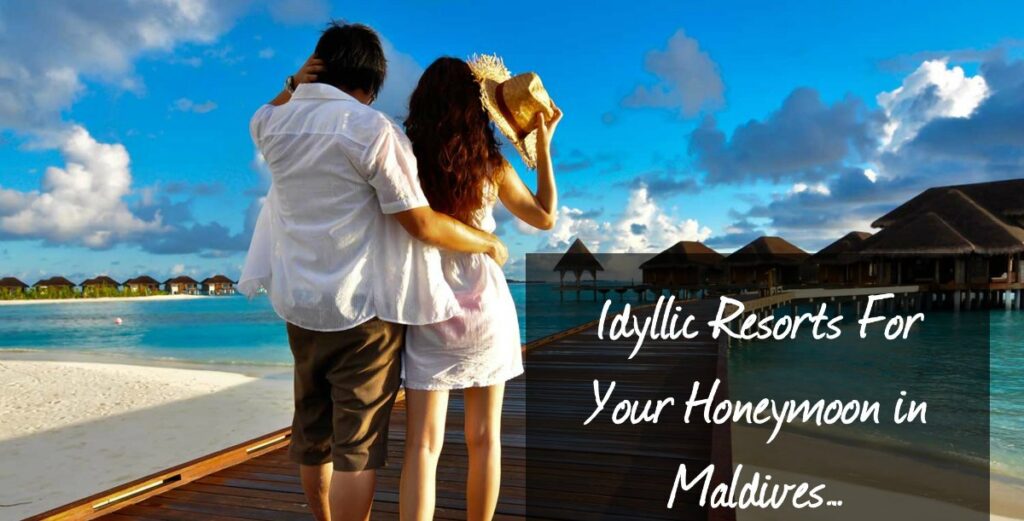
If romance is the king of emotions, then Maldives is its kingdom. Long spread of beaches covered with sparkling white sand, palm trees lined up across the shores, beautiful cottages and resorts nestled in the most secluded regions known, this island is the perfect place for love birds to rekindle the spark and fall in love. Maldives island is known as honeymooner’s paradise and that is for a reason. Find the best resorts and water villas that offer not only ultimate views and oh-so-amazing experience but also the much-wanted seclusion to the lovebirds.
Best Resorts In Maldives
We bring to you a list of 10 best resorts in Maldives for honeymoon 2019 which come with a default ‘do not disturb’ sign, and let you spend some ‘we-time’ with the love of your life. Maldives honeymoon cost depends totally upon the resort you book and the experiences you choose to have on your holiday.
- Soneva Fushi, Kunfunadhoo Island
- Taj Exotica Resort and Spa, South Malé Atoll
- Shangri-la Villingili Resort & Spa, Villingili Island
- Four Seasons Resort, Landaa Giraavaru Island
- One & Only Reethi Rah
- Cocoa Island by COMO
- Six Senses Laamu
- Baros Maldives
- Centara Grand Island Resort & Spa Maldives
- Banyan Tree Vabbinfaru
1. Soneva Fushi, Kunfunadhoo Island
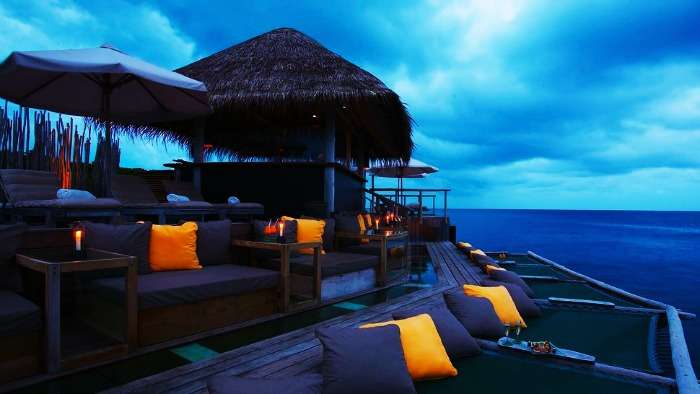
Soneva Fushi is amongst the best honeymoon resorts in Maldives. Perfectly designed for couples, nestled between a jungle and a beach, this resort contains multi-bedroom luxury villas crafted out of natural materials. Kunfunadhoo is one of the best island to stay in Maldives for honeymoon.
Suggested Room: Book yourself a royal suite with a private pool for an exotic Maldives honeymoon.
Things to do: Enjoy open-air cinema on the beach with your partner, go star gazing at the planetarium or indulge in some treetop yoga. And if you are game for some adventure, the resort provides scuba diving and snorkeling. Now, that’s a 360 degree holiday you are looking at!
Cost of stay per night: ₹67,892 – ₹186,941
Must Read: 10 Reasons Why a Honeymoon in Maldives is Sexier Than Any Other Place
2. Taj Exotica Resort And Spa, South Malé Atoll
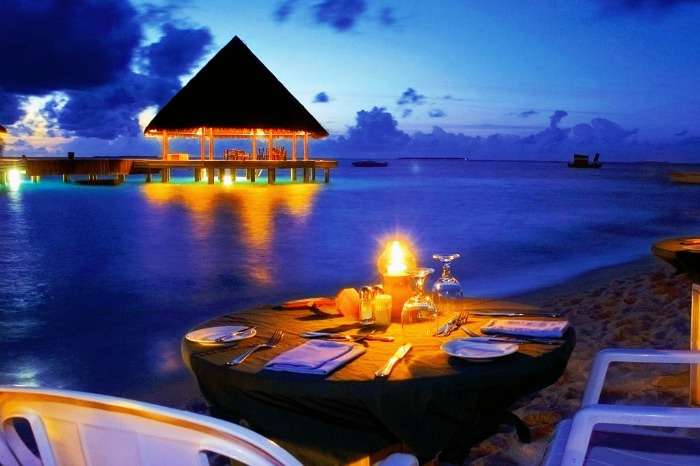
Taj Exotica Resort and Spa is an exclusive, private resort island, surrounded with tropical flora and clear blue water. It is one of the best resort in Maldives for honeymoon 2019. The lagoons and deluxe beach villas are luxuriously furnished to give you the abode of your dreams.
Suggested Room: Nothing can be more romantic than a stay at the villas over water.
Things to do: Enjoy Indian spa, gourmet cuisines and cocktails during sunset with your love. Surprise your partner with a candlelight dinner and bottles of champagne under the stars by the beach.
Cost of stay per night: ₹47,987 – ₹155,436
Suggested Read: 13 Spellbinding Water Villas In Maldives In 2019 For A Calming Vacation
3. Shangri-la Villingili Resort & Spa, Villingili Island
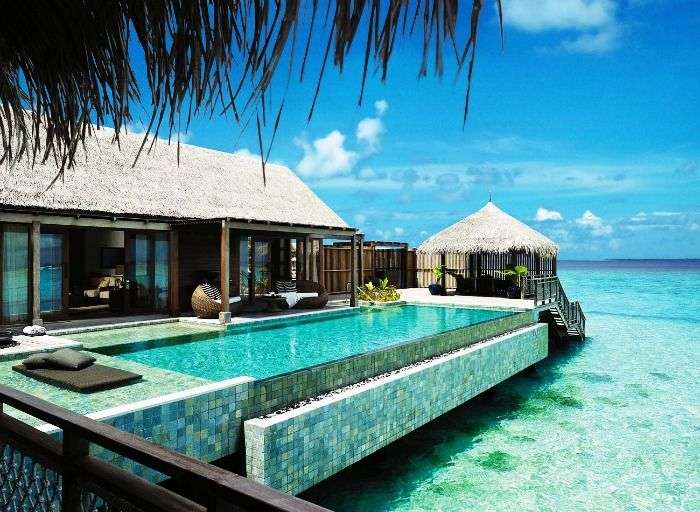
Number three on our list of top 10 resorts in Maldives for honeymoon is Shangri-La Villingili Resort built on one of the largest islands in the archipelago. The villas range from vast ocean retreats to tropical tree houses, and the CHI spa offers a holistic remedy. It is hands down one of the top resorts in Maldives for honeymoon.
Suggested Room: Fancy a stay in a tree house overlooking the majestic ocean? Then book yourself a tree villa. Nothing can be more romantic than this.
Things to do: Surrounded by nature trails, you can go on a short romantic bike ride to the neighboring island passing through the traditional Maldivian villages. It also boasts a nine-hole golf course. Guys, how about a game of love, err, golf?!
Cost of stay per night: ₹40,634 – ₹112,837
Must Read: 20 Most Romantic International Honeymoon Destinations for Every Budget
4. Four Seasons Resort Maldives At Landaa Giraavaru, Landaa Giraavaru Island
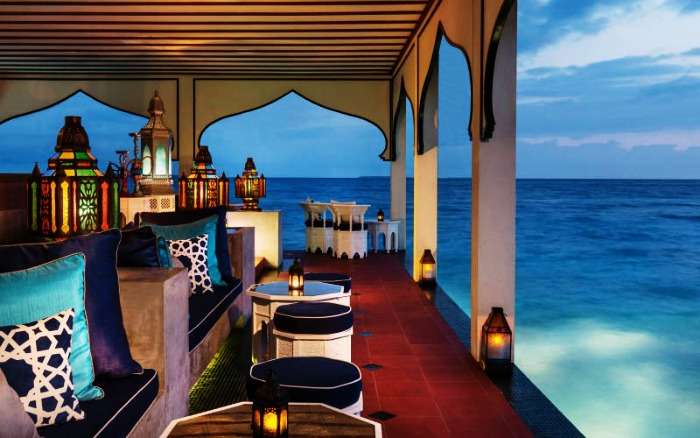
Head to this romantic resort in Maldives for a seductive honeymoon. Four Seasons Resort lies in the Baa Atoll and has 102 thatched sunrise or sunset beach and water villas edging the large lagoon. Known for its fantastic service – castaway picnics on deserted islands, the resort knows how to pamper the newly-weds and is one of the Maldives top resorts for honeymoon.
Suggested Room: Their water villas are gorgeously designed perfect to stir up the chemistry between the two.
Things to do: Treat your partner and yourself with refreshing massages to awaken kundalini energy. Dine on a private place in the middle of the lagoon for a breathtaking experience.
Cost of stay per night: ₹56,482 – ₹110,808
Suggested Read: The Azulik Resort In Mexico Offers Treetop Luxury & Breathtaking Views! Would You Check-In?
5. One & Only Reethi Rah

One & Only Reethi Rah is still the king best resorts in Maldives for honeymoon. The rooms are built enormously and luxuriously with high ceilings and beautifully furnished with private pools, overlooking the sea.
Suggested Room: For the perfect ‘we-time’ together, book a sunrise or a sunset villa overlooking the sea.
Things to do: Walk hand-in-hand with your special someone of the unusual number of perfect crescent beaches and enjoy the sunset as the day passes by.
Cost of stay per night: ₹67,258 – ₹187,956
Get Info: Family Resorts in Maldives
Planning your honeymoon in Maldives but confused about what to do? These Maldives honeymoon stories help you find your best honeymoon trip ever!
Real honeymooners. Real stays. Real opinions to help you make the right choice.
6. Cocoa Island By COMO
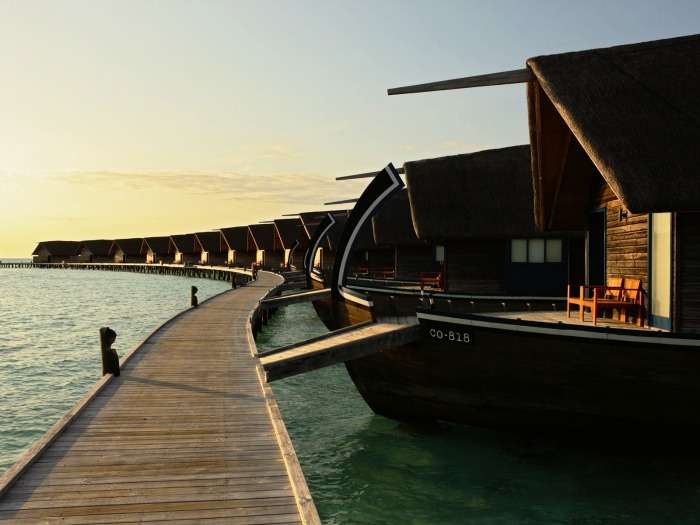
Cocoa Island is one of the most unique Maldives resorts for honeymoon. It is a beauty that combines the perfect beaches, beautiful rooms, wonderful food and superb staff. The small island has no rooms, instead is built over water in a shape that mirrors that of the island itself.
Suggested Room: The resort has beautiful rooms, however, for a private time together, book yourself a loft room.
Things to do: Enjoy an outdoor shower with your special someone and sleep away on a hammock as you see the day pass by.
Cost of stay per night: ₹52,552 – ₹104,849
Must Read: 18 kickass destinations which greet Indians with a Visa On Arrival. Let’s just Leave
7. Six Senses Laamu

Six Senses Laamu is an astonishing place, combining luxury, rustic simplicity, outstanding culinary options and plenty of activities. The island features a gorgeous white beach and boasts of a gorgeous cyan-blue lagoon where dolphins swim in great numbers all year round.
Suggested Room: If you’re looking for a secluded room for the ‘we-time’, choose nothing but the over water villas. The villas are heavenly and views spectacular.
Things to do: Water lovers should snorkel with the dolphins in the clear waters of the beach. Pamper yourself and your partner with a rejuvenating massage at the nest spa.
Cost of stay per night: ₹53,439 – ₹125,769
Must Read: 6 Best Homestays In Maldives For Your Budget Maldives Vacation
8. Baros Maldives

Baros Maldives is bounded by the clear waters of the Indian Ocean. The resort offers luxurious accommodation with home entertainment systems and private gardens.
Suggested Room: The large villas open out to a private veranda with sun loungers and stunning ocean views.
Things to do: Couples can indulge themselves at Maldives Baros’ spa or take a dip in the overwater infinity pool.
Cost of stay per night: ₹49,699 – ₹103,074
Must Read: Mauritius vs Maldives : Which One to Pick For Your Holiday?
9. Centara Grand Island Resort & Spa Maldives
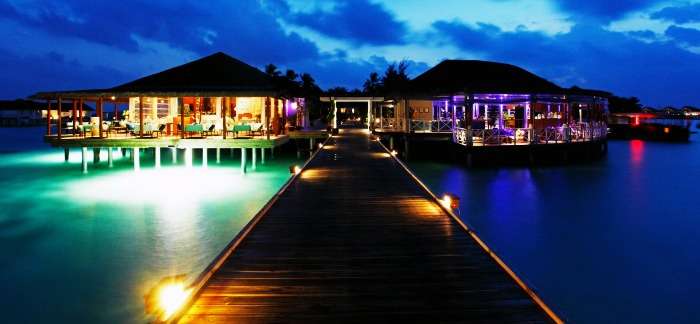
Centara Grand Island Resort & Spa is surrounded by the blue lagoon of the South Ari Atoll. It is a paradise for honeymooners in Maldives with 112 villas set over the water and luxurious suites. You can enjoy the shipwreck dive, exploring the island, dining and playing. It is one of the budget resorts in Maldives for honeymoon.
Suggested Room: Book yourself a sunset villa for they have the most romantic views.
Things to do: Of the many water sports to indulge in, plan an adventurous night diving with an instructor on the house wreck. You and your partner will absolutely love it.
Cost of stay per night: ₹38,922 – ₹102,314
Get Info : 4 Star Hotels in Maldives
10. Banyan Tree Vabbinfaru
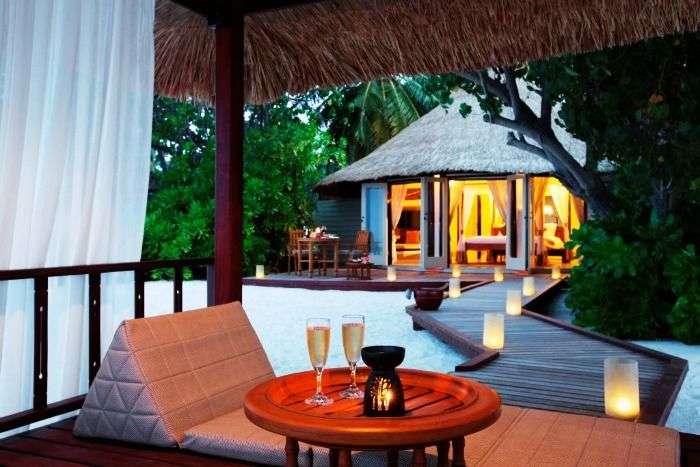
The blue relaxing waters at the Banyan Tree Vabbinfaru will give you a spirit to enjoy life. The resort is surrounded with swaying coconut trees, pure white sand, coral reef and the blue clear waters. An ideal destination for couples, Banyan Tree Vabbinfaru is amongst the best resorts in Maldives for honeymoon.
Suggested Room: Surprise your better half with an ocean front villa. The open air bathroom and doors that open up to the sea for the spectacular views will add spice to kickstart your newly married life.
Things to do: Relish your private time together at the secluded pristine beaches. Go snorkelling in the clear waters of Maldives and woo your love with the coral delights the sea has to offer.
Cost of stay per night: ₹58,384 – ₹118,732
Further Read: 9 Most Romantic Mauritius Honeymoon Beach Resorts
Fascinated by all the luxury and beauty of these resorts? Each one of these resorts is known for the spectacular experience and outstanding views. Forget about the world and get immersed in each other’s company as soon as you check in.Book your Maldives honeymoon with TravelTriangle and enjoy the lavish stay and scintillating views at these exotic resorts!
People also read:
Honeymoon resorts in the World Honeymoon resorts in Jamaica Lakshadweep honeymoon resorts
Looking To Book An International Honeymoon?
Book memorable honeymoon on TravelTriangle with 650+ verified travel agents for 65+ domestic and international destinations.